How to read and use a nautical chart Picksea
Fishing Chart. An enhanced, detailed view of bottom contours, depth soundings and detailed bathymetric data that is perfect for identifying fishing structures like humps, holes and ledges, whether you're fishing in salt water or fresh. On Navionics products, this is referred to as the SonarChart™ HD bathymetry map .
How to Read a Marine Chart [Works for Chartplotters, Too!] navigation BoatUS YouTube

Depths (also called soundings) are shown in either feet, fathoms (6 feet), or meters (3.28 feet). To see which unit of measure the chart is using, check the large magenta letters at the top right corner of the chart. Subscripts, such as 52, show depths in fathoms and feet (5 fathoms and 2 feet) or decimal meters (5.2 meters).
How to Read a Nautical Chart 15 Steps wikiHow

For example, if the scale is 1:30,000 it means that 1 inch on your chart equals 30,000 inches in real life. In simpler terms, 1 inch is about 0.4 nautical miles. Therefore, one nautical mile will be around 2.5 inches. Always check the units on your chart. The reason is that a chart from Canada won't use inches, and the scale will be different.
How To Read A Nautical Chart Nautical chart, Boat insurance, Buy a boat

To read a navigation chart, orient with cardinal directions, identify the chart title, understand symbols, find depth soundings, and identify navigation aids. Then, plot your course, measure distances, and continuously monitor your position for safe navigation. As a navigation expert, I've honed my skills in interpreting and utilizing.
How to Read a Nautical Chart 15 Steps (with Pictures) wikiHow

How to Read Latitude And Longitude On a Nautical Chart? 10 Tips. savvy navvy, the boating app that brings all essential marine information together in one place. Featuring global charts, wind and weather forecasts, tidal graphs, GPS Tracking, automatic weather routing, and marina and anchorage information. It's like Google Maps for boats.
How to Read a Navigation Chart Life of Sailing
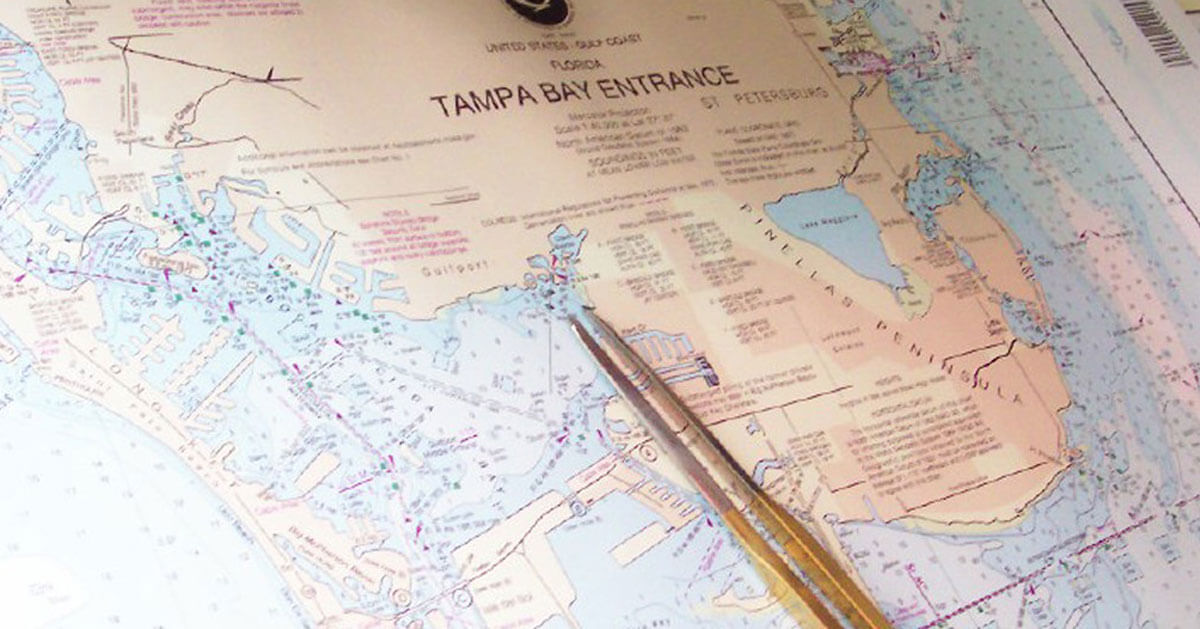
Scale. Scale on a nautical chart is the ratio between the inches on the chart and the real-world distances. So, for instance, a scale of 1:20,000 means that 1 inch on the chart is 20,000 inches of actual distance. For better understanding, 1 inch on the chart is a fraction of a nautical mile, 0.4 nautical mile to be exact.
How to Read a Nautical Chart 11 Steps (with Pictures) wikiHow

If the scale is 1:30,000 it means that 1 inch on your chart equals 30,000 inches in real life. That means 1 inch is about 0.4 nautical miles. So one nautical mile will be around 2.5 inches. Make sure you check the units on your chart, however. A chart from Canada will not use inches and the scale will be different.
How to Read a Nautical Chart Lakefront Living International, LLC
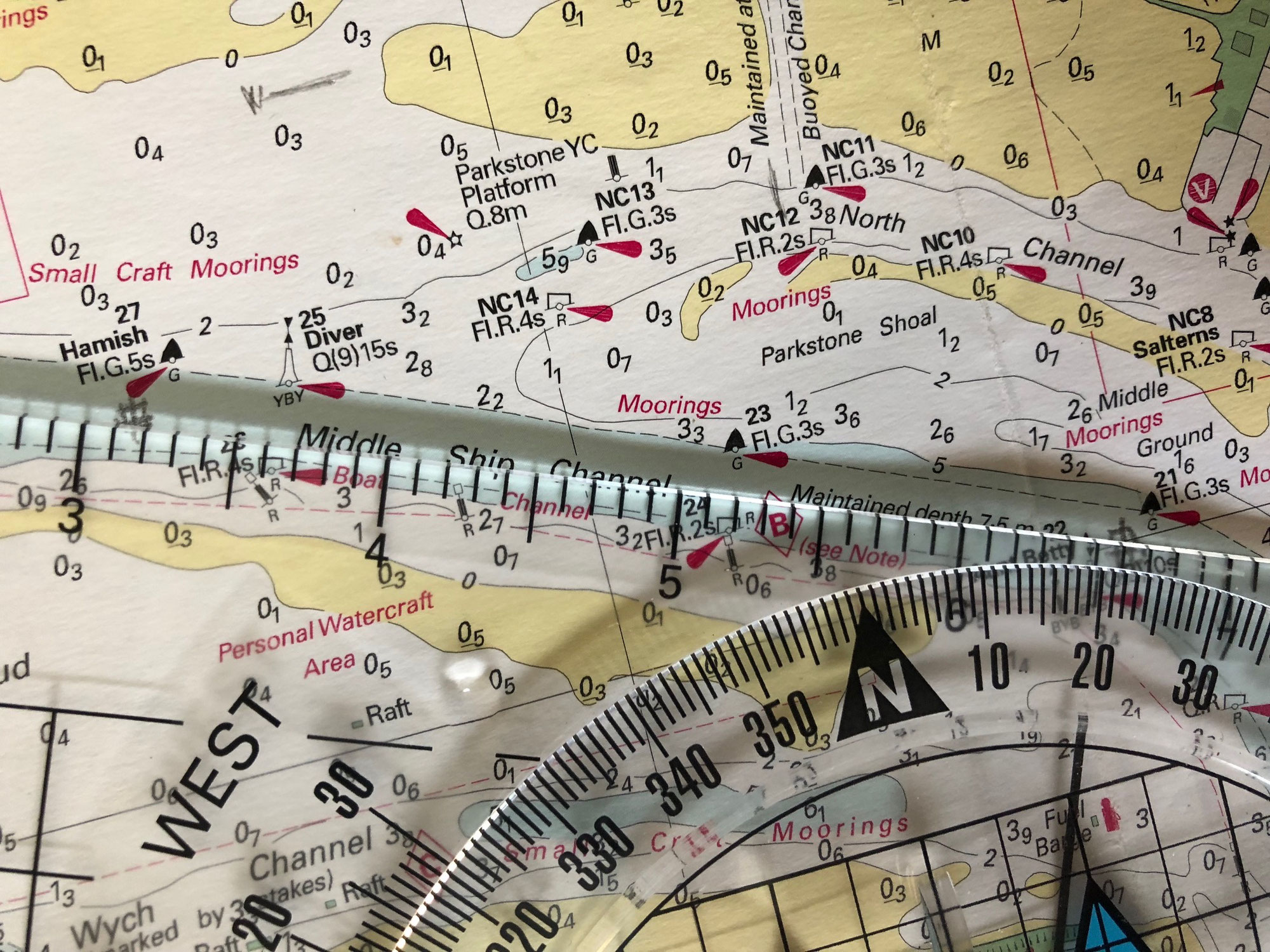
To effectively read and plot a course on a nautical chart, you'll need a few essential tools. These include: Parallel Rulers: These rulers are used to transfer lines and angles from the compass rose to your course line. They ensure that your course is plotted accurately in relation to true or magnetic north.
Chart work & Navigation Tutorials Marine Education RYA Powerboat & Jetski Courses, Poole
A Comprehensive Guide. savvy navvy, the boating app that brings all essential marine information together in one place. Featuring global charts, wind and weather forecasts, tidal graphs, GPS Tracking, automatic weather routing, and marina and anchorage information. It's like Google Maps for boats. Inspired to get on the water?
Using Marine Charts Campfire Collective
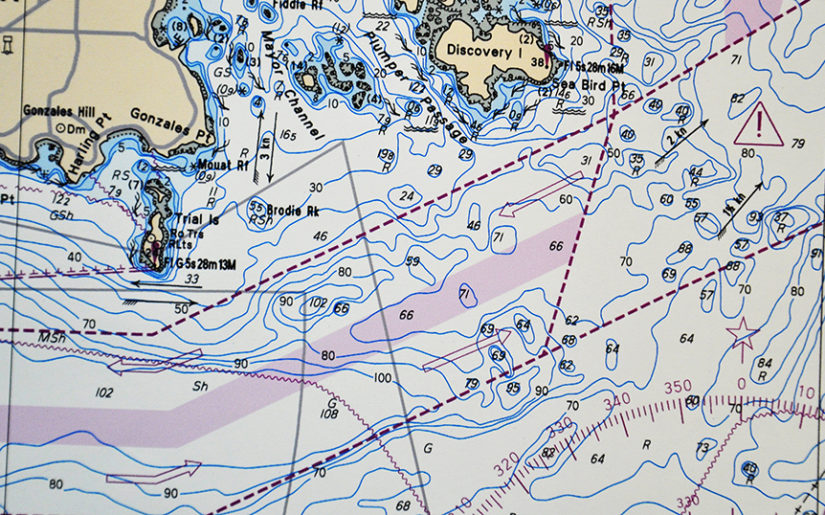
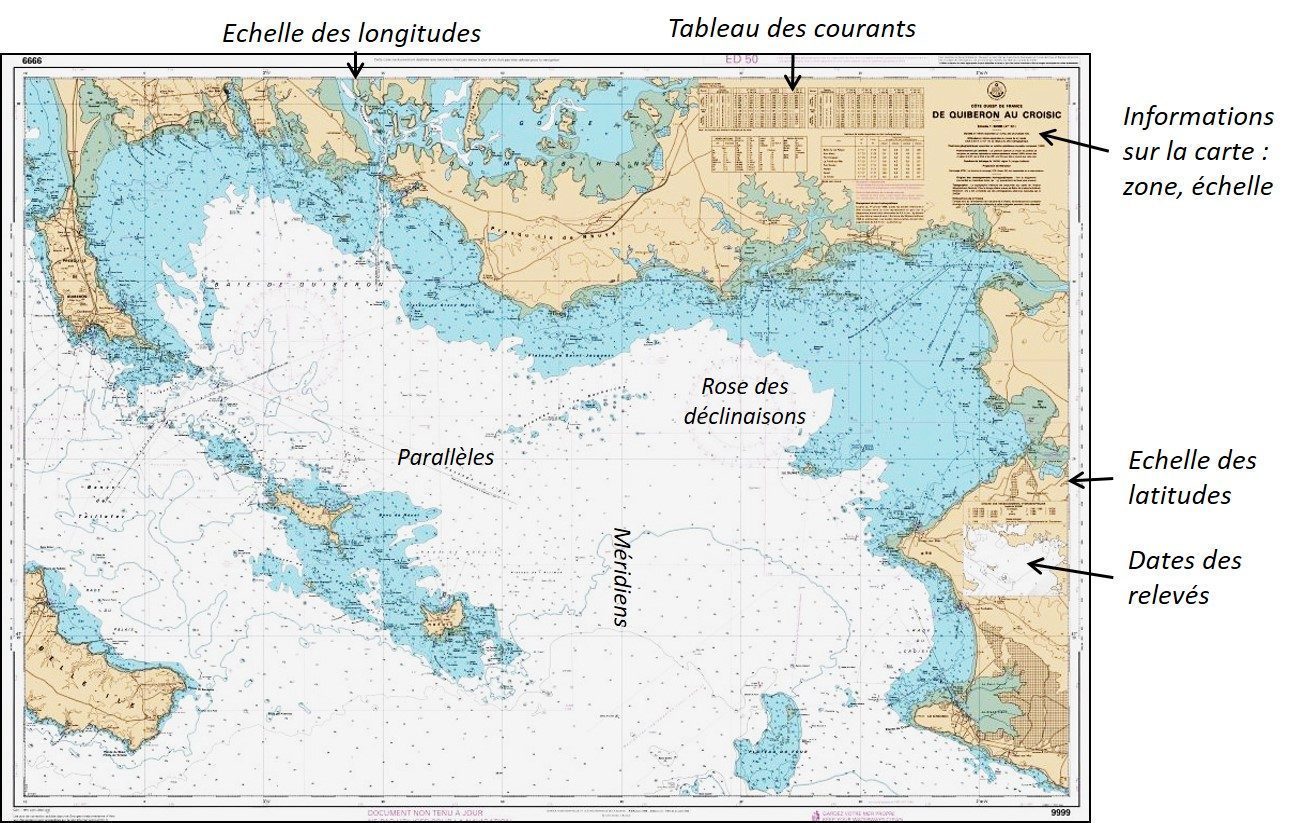
2. Charts have latitude and longitude marked at the edges. Given a set of two numbers (lat/lon), you should be able to locate yourself on a chart anywhere in the world. 3. Charts show aids to safe navigation like buoys, beacons, lights, channels, etc. Diamonds are buoys, squares and triangles are fixed markers, and teardrops represent lights.
A Nautical Chart — Yacht Charter & Superyacht News
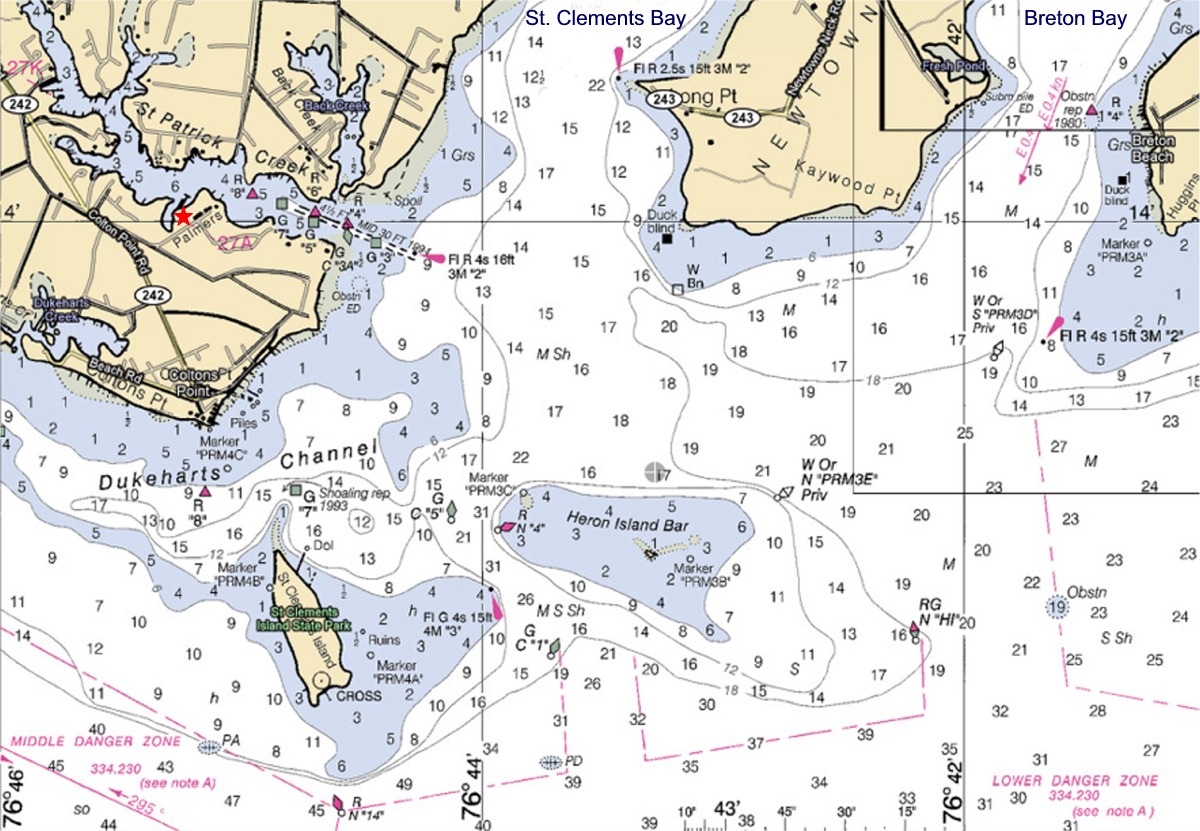
1. Use the scale indicator to track distance on a chart. Scales are expressed as ratios and differ from map to map. The scale, printed in the upper right corner of the map, will look something like 1:100,000. A ratio of 1:10,000 indicates that every 1 in (2.5 cm) the map equals 10,000 in (25,000 cm) in the real world.
How to Read a Nautical Chart 11 Steps (with Pictures) wikiHow

Coastal charts are typically drawn in a 1-to-20,000 to 1-to-80,000 scale to show more detail. Navigable inland waterways, including the Great Lakes and major rivers, use statute miles, while coastal and offshore charts use nautical miles. A nautical mile is equal to one minute of latitude, which simplifies navigation computations.
Nautical Chart Types Explained (Illustrated Guide) Improve Sailing
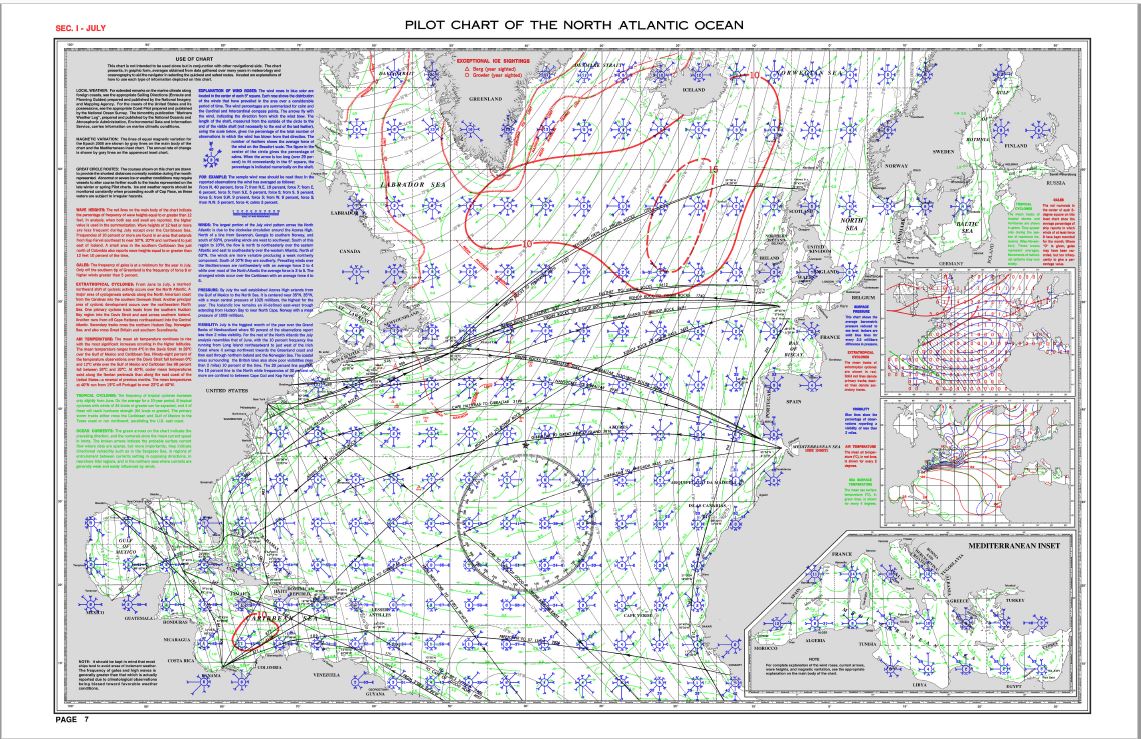
Using nautical charts. Here are some tips for using nautical charts: Understand the symbols: Make sure you understand what each chart symbol means before setting out on your journey.; Use a compass rose: Nautical charts include a compass rose that is used to show the orientation of the cardinal directions.; Calculate distances: charts provide distance scales that can help you calculate.
How to Read Nautical Charts Garmin Blog

Projection identification. Chart projection is a method by which we represent a curved surface (the earth) on a flat piece of paper (the chart). The Mercator projection is the most commonly used for nautical charts. It virtually reduces the shape and direction distortions that occur during the flattening process.
How to Read a Nautical Chart 11 Steps (with Pictures) wikiHow

In order to learn marine navigation, you need to understand how to locate your position (using bearings, GPS, stars, etc.), how to read nautical charts to determine a course, how to plot a course on a nautical chart or chartplotter, and how to use a compass (in order to monitor the course). This still might seem like a lot.
How to Read a Nautical Chart 15 Steps (with Pictures) wikiHow

Use a plotter to line up along your route and then read off the course. 5. Distance. To measure distance use a pair of dividers (like a drawing compass but with two points). Use the scale on the left or right side to convert your measurement to nautical miles (1 minute of latitude = 1 nautical mile). 6.
.